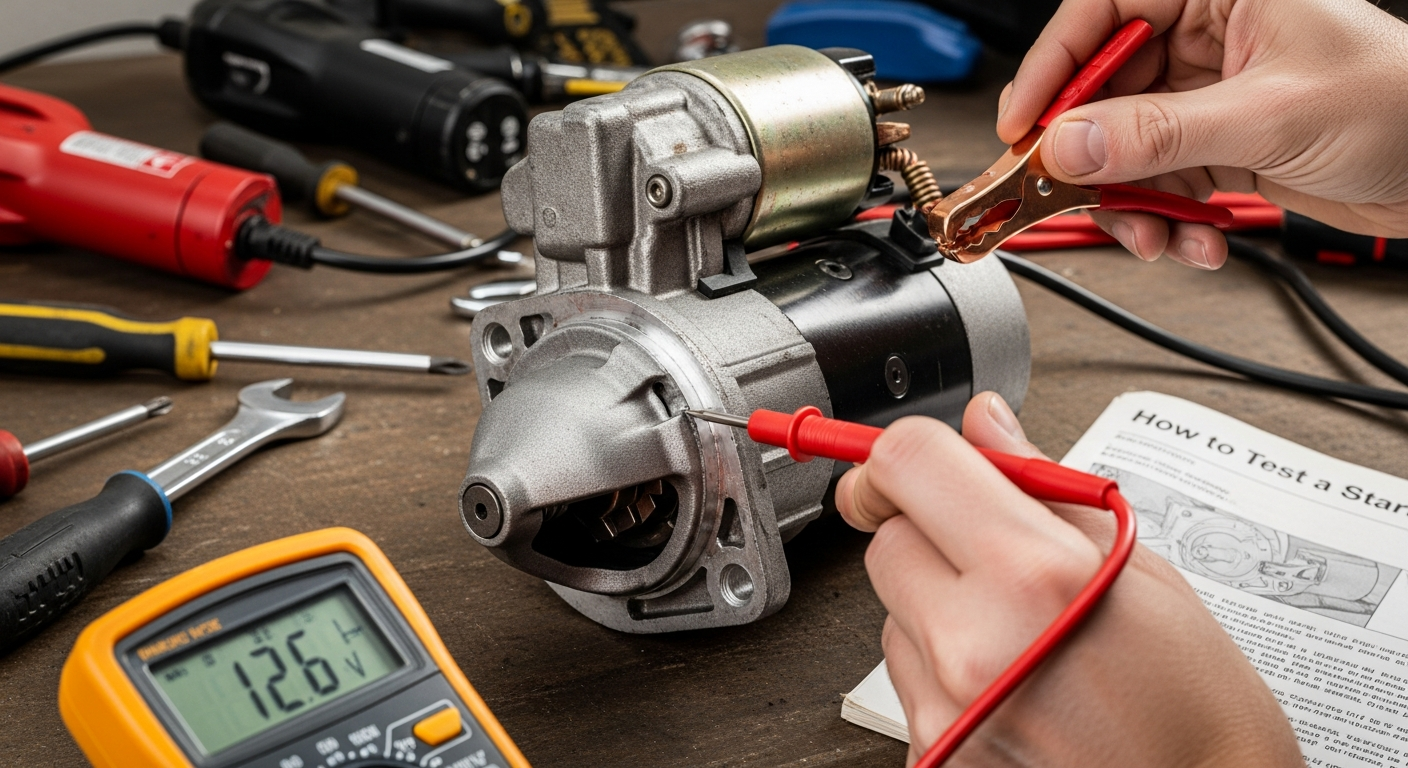
How to Test a Starter is one of the most important things to know if your car is not starting well or making strange noises. Learning how to test a starter can save you money and time because you can find the problem before it becomes serious. A starter is the part of the car that helps the engine start when you turn the key. If it fails, the car will not start at all. Many people think a dead battery is the problem, but often the starter is the real cause. Testing a starter correctly helps you understand if you need a new starter or if there is another issue with the car’s electrical system. In this guide, we will explain step by step how to test a starter safely and easily. We will also talk about the signs of a bad starter, tools you need, and tips to avoid mistakes. After reading this guide, you will feel confident to check your starter on your own without going to a mechanic for simple problems.
Testing a starter is not difficult, but you need to be careful and know some basics about car batteries and electrical connections. First, you should know the parts of the starter, how it connects to the battery, and how it interacts with the ignition system. Many people make mistakes because they try to test the starter without understanding how it works. This can cause sparks, short circuits, or even damage to the car. We will explain everything in simple words so even beginners can follow. We will also give tips for using tools like multimeters and jumper cables, and how to check if the starter motor is spinning or not. By the end, you will know exactly how to test a starter and what the results mean for your car.
Understanding the Starter
A starter is an electric motor that turns your car engine when you start the car. It works with the battery to give power to the engine. Inside the starter, there is a small motor and a solenoid. The solenoid acts like a switch that connects the battery to the motor. When you turn the key, the solenoid activates the motor, and the engine starts. If the starter stops working, the car will not start, even if the battery is full. Understanding this will help you test the starter correctly.
Signs Your Car Starter Needs Testing
Before testing, you should look for signs that your starter may be bad. These signs include a clicking sound when you turn the key, the engine turning slowly, or no sound at all. Sometimes the car starts intermittently, meaning it works sometimes and not other times. These problems usually show that the starter is weak or failing. Knowing these signs will help you decide if you need to test the starter or if the problem is something else.
Tools You Need to Test a Starter Safely
Testing a starter requires some basic tools. You will need a multimeter to check electrical connections, jumper cables to test the starter directly from the battery, and safety gloves to protect your hands. You may also need a wrench or screwdriver to access the starter. Using the right tools will make testing safe and easier. Never test a starter without safety precautions because it can be dangerous.
Step by Step Guide on How to Test a Starter
Step 1: Check the Battery
Even if your car is not starting, check the battery first. Make sure it has enough charge because a weak battery can cause the starter not to work. Use a multimeter to check the battery voltage. A healthy battery usually shows around 12.6 volts. If the battery is weak, charge it or replace it before testing the starter.
Step 2: Inspect the Starter Connections
Look at the wires connected to the starter. Make sure they are clean and tight. Loose or corroded wires can stop the starter from working. Clean the terminals with a wire brush and tighten the connections. This is a simple step, but it can fix starter problems without any complex testing.
Step 3: Test the Starter with a Multimeter
Set your multimeter to measure voltage. Connect the positive lead to the starter’s main terminal and the negative lead to the car body or ground. Ask someone to turn the key while you watch the multimeter. If the voltage drops significantly when starting, it means the starter is drawing power but not working properly. If there is no voltage, the problem may be the ignition switch or wiring.
Step 4: Test the Starter with Jumper Cables
If the multimeter test is not enough, you can test the starter directly using jumper cables. Disconnect the starter from the car battery and connect it directly using jumper cables. One cable goes to the positive terminal and one to the negative. When connected, the starter motor should spin. If it does not spin or spins slowly, the starter is likely bad and needs replacement.
Step 5: Listen for Strange Sounds
While testing, listen for unusual sounds like grinding, clicking, or whirring. Grinding usually means the starter gear is worn out. Clicking may indicate a weak solenoid. These sounds help you identify what part of the starter is failing.
Step 6: Check for Overheating
After testing, touch the starter carefully. If it is very hot, it may be damaged. Overheating can happen if the starter is used too long or if there is an electrical problem. A hot starter may need repair or replacement.
Step 7: Reinstall and Test the Starter
After testing, reinstall the starter properly and check the car. If the car starts smoothly, the starter was fine, and the problem may have been wiring or connections. If the car still does not start, the starter likely needs replacement.
Common Mistakes When Testing a Starter
One common mistake is testing the starter without checking the battery. A weak battery can give wrong results. Another mistake is not using safety equipment. Testing a starter involves electricity, and sparks can happen. Do not touch the starter with wet hands or without gloves. Also, do not try to test the starter while the car is running because it can cause serious damage.
What to Do If Your Starter Fails the Test
If your starter fails the test, you have a few options. You can repair it if only the solenoid or brushes are worn. Sometimes a professional mechanic can rebuild the starter. If the starter motor is completely damaged, you will need a new starter. Always buy a starter that matches your car model. Installing the wrong starter can cause bigger problems.
Conclusion
To keep your starter working long, maintain your car’s battery and electrical system. Avoid starting the car repeatedly in a short time, as it can overheat the starter. Keep the starter connections clean and tight. Regular car maintenance helps prevent starter problems and keeps your car reliable.
FAQs
How long does a starter last?
A car starter usually lasts between 80,000 to 150,000 miles, but this depends on how often you start the car and how well you maintain it.
Can I test a starter without tools?
You can do a basic test by listening to the car when starting, but proper testing requires tools like a multimeter and jumper cables.
Is it safe to test a starter myself?
Yes, if you follow safety steps, use gloves, and check the battery first. Always avoid touching wires with bare hands.